
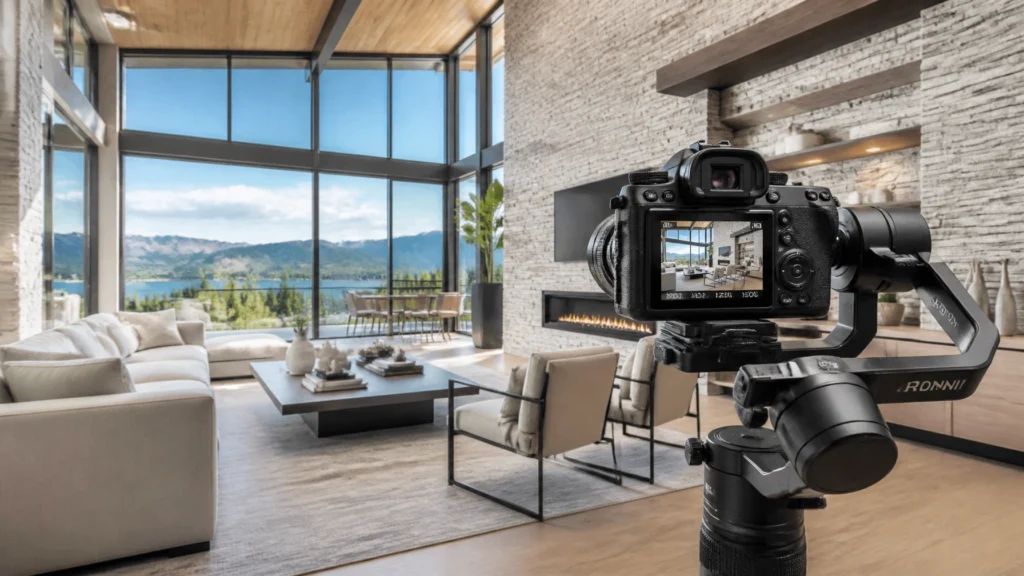
If you had told me 15 years ago that taking pictures of houses would become my full-time career, I probably would have laughed. Back then, I was just looking for a cool side project. I remember being inspired by a local photographer, Matt Ramage, who had just photographed a stunning $3 million home. I thought to myself, "I can do that."
Since that day, I’ve photographed over 10,000 homes. I’ve been on almost every street in Saskatoon and the surrounding areas. What started as a simple photography hobby has evolved into a highly profitable, systematized media company.
I’ve learned a lot in those 14+ years, mostly by doing things the hard way so you don’t have to. If you’re looking to build a business that helps you shoot faster, earn more, and deliver better quality, this is the roadmap I used to get there.
The Journey. From "Just Photos" to a Media Powerhouse
When I started, there was no YouTube "University" for real estate photographers. My main resources were a website called PFRE (Photography for Real Estate) and a single PDF guide I bought online.
Back then, my workflow was manual and slow. I would shoot from 9:00 AM to 3:00 PM and then spend the next several hours in Lightroom, manually blending brackets using a plugin called Enfuse. Delivery was a clunky process of emails and Dropbox links.
Today, my business is a one-stop shop. To stay competitive and maximize revenue per shoot, I expanded from photography into a full suite of media services:
- HDR Photography: Still the core of every listing.
- Drone Photography & Video: The "eye candy" that sells the neighborhood, not just the house.
- Cinematic Video Walkthroughs: Essential for social media like Reels and TikTok.
- Virtual Tours (iGUIDE): A superior alternative to Matterport with integrated floor plans.
- Floor Plans (CubiCasa): High-accuracy scans done in minutes with a smartphone.
- AI Enhancements: Virtual twilight, virtual staging, and "photo-video" effects.
By offering a "one call does it all" service, I became a marketing partner for realtors, not just a guy with a camera.

The 60-Minute On-Site Workflow
The biggest mistake photographers make is wasting time on-site. If you can’t get in and out quickly while maintaining quality, you can’t scale. My goal for most standard listings is to be done in about 60 minutes.
Here is my current step-by-step workflow:
- Preparation (15 min early): I show up early to meet the homeowners and realtor. I do a quick walkthrough to adjust lights and declutter.
- Floor Plan Scan: I start with CubiCasa. I walk through the house scanning baseboards with my iPhone. It takes 5–10 minutes.
- Handheld HDR Photos: I move through the house in a specific order: front exterior, main living areas, primary bedroom, basement, then backyard.
- Cinematic Video: I use my iPhone on a DJI Osmo Mobile for a smooth walkthrough.
- Drone Work: I launch the DJI Air 3S for those essential neighborhood and "hero" shots.
- Virtual Tour: If booked, I finish with my iGUIDE camera.
For a deeper dive into this process, check out The 60-Minute Real Estate Photography Workflow.
The Big Shift: Why I Ditched the Tripod
For 13 years, I used a tripod for every single shot. It was the only way to ensure sharp HDR brackets. But a few months ago, I made a radical change: I went handheld.
Thanks to modern mirrorless sensors and AI-powered editing, the tripod is no longer a requirement for standard real estate work. By shooting handheld with my Sony A7 IV, I’ve saved nearly 50% of my on-site time.
The secret is AutoHDR. I shoot brackets (-2, 0, +2) while holding the shutter button. The AutoHDR AI automatically aligns the shots, removes ghosting, and balances the exposure perfectly. This allows me to focus on composition and speed rather than fiddling with tripod legs in every corner.

Essential Gear List (2026)
You don't need a truckload of gear, but you do need tools with high dynamic range and reliability. Here is what I use daily:
- Camera: Sony A7 IV (The IBIS is incredible for handheld work).
- Lens: Sony FE 12-24mm or Sony FE 16-35mm f/2.8 GM II.
- Drone: DJI Air 3S (Handles wind better than the minis).
- Video: iPhone 15 Pro Max + DJI Osmo Mobile.
- Audio: DJI Mic 2 for agent-led videos.
- Tripod (For low light/specialty): Manfrotto 055 Aluminum.
- Workstation: MacBook Pro with M3 Max (Blazing fast for Lightroom and DaVinci Resolve).
For more recommendations, see our Ultimate Real Estate Photography Gear Guide.
Why Systems Beat Talent
In this industry, consistency is more important than being a "starving artist." If your quality fluctuates, your clients will leave. You need a system that works every single day.
My backend is powered by HDPhotoHub. It handles everything:
- Online Booking: Clients book via my app; no more back-and-forth texting.
- Automated Invoicing: They pay to download. I never have to chase money.
- Delivery: Photos, video, and floor plans are all in one beautiful property site.
When you have a system, you spend your time shooting (which pays well) instead of editing and admin (which doesn't).

Embracing AI to Replace Friction
AI isn't just a buzzword; it's an employee that works for pennies. I use AI to handle the tasks I used to hate:
- AI Editing: AutoHDR delivers my photos in 20 minutes with perfect blue skies and straight verticals.
- Virtual Staging: I use Virtual Staging AI to furnish empty rooms in seconds for under $1 per photo.
- Content Creation: I use tools like ChatGPT for emails and social media captions.
AI protects my time and energy, allowing me to scale without burning out. For a deep dive into these tools, read AI for Real Estate Photographers.
Why Most Photographers Fail
After 14 years, I’ve seen many competitors come and go. They usually fail for three reasons:
- Underpricing: They charge $99 for everything and realize they can't afford their bills. (Check out my Pricing Guide to avoid this).
- Burnout: They do everything manually, shooting, editing, and billing, and hit a ceiling.
- Lack of Communication: They forget that they are in a service business. Being friendly, reliable, and meeting your 24-hour deadline is often more important than the photos themselves.

Final Recommendation: Focus on Speed and Scale
Building a business that lasts 10,000+ homes isn't about being the best photographer in the world; it’s about being the most reliable marketing partner in your city.
Stop sitting behind a desk editing for 6 hours a day. Embrace handheld shooting, automate your booking, and let AI handle your post-processing. When you remove the friction, you can finally build a business that serves your life, rather than a job that controls it.
Ready to start your journey?
- Read Building a Six-Figure Real Estate Photography Business.
- Watch my full breakdown on YouTube.
- Download my Free Workflow Checklists.
FAQ: Building Your Business
Q: Do I really need a full-frame camera?
A: Yes. For real estate, you need the widest possible field of view and high dynamic range. Full-frame cameras like the Sony A7 IV are the industry standard for a reason.
Q: How do I get my first clients?
A: Start by dropping off postcards at local offices and offering a "first shoot free" or discounted trial to top-producing agents. Once they see the speed of your workflow, they'll be hooked.
Q: Is handheld HDR as good as tripod HDR?
A: With AutoHDR AI, yes. The software aligns the brackets and removes any slight movement, resulting in a crisp, professional image in half the time.
Q: Should I offer video right away?
A: Absolutely. Video is the highest-margin service you can offer. Use your iPhone and a gimbal to keep it simple and profitable.