
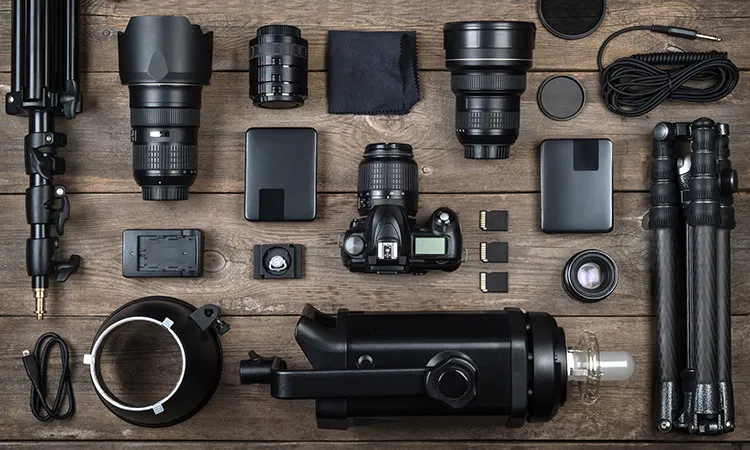
After more than 14 years in real estate photography and over 10,000 homes photographed, I have learned that a backup camera is not optional once you are working professionally.
Your camera may fail before a shoot, during a shoot, or at the worst possible moment, such as 7:40 AM when you are scheduled to photograph a home at 8:00.
A backup body protects more than the shoot. It protects your client relationship, your schedule, and your reputation.
Some links in this article are affiliate links. I recommend equipment based on its value in a real workflow, not simply because it is available or generates a commission.
Quick Verdict
For Sony photographers, the Sony A7 IV is the best overall backup camera for most professional real estate businesses.
It shares the Sony E-mount and NP-FZ100 battery system with the Sony A7 V, produces 33-megapixel files, and delivers excellent dynamic range for bracketed HDR interiors. It is professional enough to use as a primary camera and affordable enough to make sense as a backup.
If your budget is tighter, a used Sony A7 III can still be a capable backup. If you want the closest possible match to your A7 V, a second A7 V is the most seamless, but not necessarily the best use of your money.
Why I Recommend This Camera

My current primary camera is the Sony A7 V, while the Sony A7 IV was my workhorse for years. That experience matters because a backup should not only look good on a specification sheet. It needs to work when you are under pressure.
The most important question is not:
“Which camera has the highest specifications?”
The better question is:
“Can I pick up this camera immediately and finish the job without changing my entire workflow?”
A good backup body should let you:
- Use the same wide-angle lenses
- Share batteries and chargers
- Continue shooting your normal HDR brackets
- Maintain consistent image quality
- Avoid re-learning menus during a stressful shoot
- Deliver the job on time
If your main camera fails and your backup requires different lenses, batteries, settings, and editing profiles, it is not a complete backup system. It is simply another camera.
Key Features That Matter
1. Same Lens Mount
For a Sony photographer, staying with the Sony E-mount is one of the biggest advantages.
If your main camera stops working, you should be able to remove your 16–35mm or 12–24mm lens and mount it directly on the backup body. You should not have to carry a second lens system just in case something goes wrong.
The Sony FE 16–35mm f/2.8 GM II is a strong professional option for interiors. The Sony FE 12–24mm is useful when you need more coverage in tight spaces.
2. Battery Compatibility
The Sony A7 V, A7 IV, and A7 III use the NP-FZ100 battery system. That means your existing batteries and charger can support both your main and backup bodies.
This may seem like a small detail, but it becomes important during a busy day. You do not want separate battery types, separate chargers, or a backup body that is sitting unused because you forgot its specific battery.
3. Dynamic Range
Real estate interiors often contain bright windows and dark rooms in the same frame.
Your backup camera needs enough dynamic range to preserve window detail while giving you usable shadow information. This is especially important if you shoot bracketed HDR or handheld HDR.
The camera will not eliminate the need for correct exposure and bracketing. However, a modern full-frame body gives your editing software better source material to work with.
The Complete HDR Real Estate Photography Guide explains how to build a repeatable bracketed workflow.
4. Speed and Familiarity
Autofocus speed is useful, but for most interior stills, familiarity is even more valuable.
You should know how to quickly:
- Set manual exposure
- Activate exposure bracketing
- Change ISO
- Switch between photo and video
- Review the last bracket
- Format or change cards safely
- Adjust white balance
- Switch from autofocus to manual focus
A camera that is technically fast but unfamiliar can slow you down. A slightly older body that you know well can keep the shoot moving.
5. Dual Card Slots
I prefer dual card slots in a primary professional body because they provide another layer of file protection.
The Sony A7 IV has two card slots, while some smaller or more compact backup bodies may only have one. A single-slot camera can still be useful as a backup, but I would be more comfortable using it as an emergency body than as my only professional camera.
Real-World Performance

A backup camera should be able to handle the same situations as your main camera:
- Dark basements
- Bright rooms with large windows
- Tight bathrooms
- Mixed color temperatures
- Exterior detail
- Fast-moving shoot schedules
- Occasional video walkthroughs
For standard interiors, I would rather have a reliable 33-megapixel body with familiar controls than an expensive camera that requires a different lens or editing process.
The Sony A7 IV is particularly practical because its resolution is close to the A7 V. That makes it easier to combine files, process brackets, and maintain a consistent gallery.
The A7 III has lower resolution, but it remains capable of producing professional listing images. For MLS and online marketing, resolution is only one part of the result. Composition, lighting, dynamic range, editing, and consistency matter just as much.
Workflow Advantages
A backup camera improves your business in several ways.
It Prevents Cancellations
If your camera fails and you have no backup, you may need to cancel or reschedule. That can disrupt the agent’s marketing timeline and force you to explain a problem that the client should never have to manage.
It Protects Your Shooting Speed
With a matching backup body, you can continue using your existing lens, tripod, batteries, and settings. You lose minutes, not the entire appointment.
It Protects Your Editing Workflow
Similar cameras produce more consistent files. That matters when you process HDR brackets, apply presets, or send files through an automated editing system.
I use AutoHDR to reduce repetitive HDR editing work, but automation works best when the source files are captured consistently.

It Protects Client Experience
Clients do not care that your camera failed. They care that the photos are delivered when promised.
A reliable backup is part of the service you sell. It supports dependable scheduling, consistent quality, and professional communication.
Efficiency should improve your margin, not force you to reduce your pricing. Price your services based on the value, reliability, and marketing assets you provide, not simply on how quickly your internal workflow operates.
Pros
- Same Sony E-mount as the A7 V
- Shares NP-FZ100 batteries and chargers
- 33-megapixel files match the A7 V more closely
- Strong dynamic range for interiors and HDR
- Dual card slots
- Familiar controls for Sony photographers
- Capable enough to serve as a primary body
- More affordable than buying another newest-generation camera
Cons
- Not an exact match for every A7 V feature
- Older processing and autofocus technology than the A7 V
- A7 III files are lower resolution than A7 V and A7 IV files
- A compact backup body may have only one card slot
- Buying a backup adds cost before it produces direct revenue
- A backup is useless if it is not tested and maintained
Who Should Buy This Camera?
The Sony A7 IV is a strong choice for:
- Sony A7 V owners who want a dependable backup
- Real estate photographers moving from hobby work into paid assignments
- Photographers who need dual card slots
- Businesses with multiple shooters who need consistent files
- Professionals who want a second body that can also handle video
- Photographers who already own Sony FE lenses and NP-FZ100 batteries
If you are still using one camera for every paid job, the A7 IV is one of the first business purchases I would consider after a reliable wide-angle lens, tripod, and editing workflow.
Who Should Skip It?
Skip the A7 IV as a backup if:
- You do not use Sony equipment
- You only photograph occasionally and can reasonably reschedule
- You need the smallest possible body for travel
- You are planning to leave the Sony system entirely
- Your main camera is already an A7 IV and you need an exact duplicate with identical controls and redundancy
Canon and Nikon photographers should generally stay within their current system. A second Canon body is a better backup for a Canon shooter, and the same principle applies to Nikon. A camera that cannot accept your existing lenses is not a practical emergency solution.
Recommended Accessories
A backup body is only useful if the rest of the system supports it.
Wide-Angle Lens
Keep at least one dependable lens that can move between both bodies. For Sony full-frame photographers:
Batteries and Cards
Keep enough NP-FZ100 batteries for a full day, and label your cards so you can identify them quickly. Test every battery and card before relying on it professionally.
Tripod
A stable tripod protects image quality and keeps your HDR frames aligned. The Manfrotto 055 Aluminum Tripod is a dependable option for photographers who prioritize stability.
Geared Head
The Manfrotto 410 Junior Geared Head allows precise adjustments when correcting composition and vertical lines.
Alternatives
| Backup option | Best for | Main advantage | Main tradeoff |
|---|---|---|---|
| Sony A7 V | Maximum consistency with an A7 V primary | Closest operational and file match | Highest cost |
| Sony A7 IV | Most professional Sony photographers | 33 MP files, same battery system, dual slots | Older than the A7 V |
| Sony A7 III | Budget-conscious or used-market buyers | Strong image quality at a lower cost | Lower resolution and older features |
| Sony A7C II | Photographers prioritizing compact size | Small body with modern Sony performance | Less traditional handling and fewer card-slot options |
| Second Canon or Nikon body | Shooters already invested in those systems | Shares lenses and batteries within that system | Not useful as a Sony backup |
You can review my broader recommendations on the RE Media Systems Recommended Gear page.
Frequently Asked Questions
1. Do I really need a backup camera for real estate photography?
If you are taking paid bookings, a backup body is a practical form of business insurance. It can prevent a camera problem from becoming a missed appointment.
2. Is the Sony A7 IV still good enough in 2026?
Yes. It remains a capable full-frame camera for real estate photography, HDR, video, and professional client work. Newer cameras may be faster, but the A7 IV still provides the image quality and features most property photographers need.
3. Is the Sony A7 III a good budget backup?
Yes, especially if you find a well-maintained used body. It has lower resolution than the A7 IV and A7 V, but it can still produce professional listing images when used with good technique and editing.
4. Should my backup camera have the same lens mount?
Ideally, yes. Sharing lenses is one of the biggest reasons to keep your primary and backup bodies within the same camera system.
5. Should I buy a second A7 V instead of an A7 IV?
Buy a second A7 V if you need the closest possible match and the cost fits your business. For most photographers, the A7 IV provides enough compatibility and quality at a more practical price.
6. Is one card slot enough in a backup camera?
It can be acceptable for an emergency body, but I prefer dual card slots in a primary professional camera. Consider your client volume, risk tolerance, and backup process.
7. Do I need to practice with my backup camera?
Absolutely. Put the same lens on it, load your normal settings, and shoot a complete practice bracket. A camera left in a bag with an empty battery is not a real backup.
8. Should I use the same camera settings on both bodies?
Use the same core settings whenever possible: RAW capture, manual exposure, white balance, bracketing, and focus behavior. Matching settings reduces mistakes when switching bodies.
9. Can I use a Canon or Nikon camera as a Sony backup?
Not practically if you only carry Sony lenses. A cross-brand body may produce good images, but it will not solve the immediate lens and battery problem.
10. Does a backup camera mean I should lower my prices?
No. Your clients pay for the finished media, reliability, communication, and convenience. Better internal systems improve your profitability; they do not reduce the value of the service.
Final Recommendation
For most Sony real estate photographers, the Sony A7 IV is the best backup camera for a professional A7 V workflow.
It shares the lens mount and battery ecosystem, produces closely matched 33-megapixel files, supports reliable HDR work, and includes the features needed to complete a paid shoot if your primary body fails.
The Sony A7 III is a reasonable budget option, especially for photographers building their first professional kit. A second A7 V is the premium choice when maximum consistency matters more than cost.
Whatever body you choose, make it part of a complete system:
- Keep batteries charged
- Test cards regularly
- Match your settings
- Practice switching bodies
- Store the backup where you can reach it quickly
- Keep a compatible wide-angle lens available
- Maintain a consistent editing workflow
When you build a dependable system, a camera failure becomes an inconvenience instead of a crisis. That helps you shoot faster, deliver better quality, protect your client relationships, and build a more profitable real estate media business.
When building a complete listing package, I also include premium floor plans in every listing because the goal is to deliver a complete marketing product, not just a set of photographs. If you are evaluating CubiCasa or any floor-plan service, verify current pricing directly with CubiCasa before making a purchasing decision. You can review the CubiCasa pricing information page.
What to Do Next
- Compare the Sony A7 V and Sony A7 IV
- Explore the RE Media Systems Recommended Gear
- Review the Complete HDR Real Estate Photography Guide
- Browse the RE Media Systems Guides
- Build a backup-camera checklist before your next paid shoot